
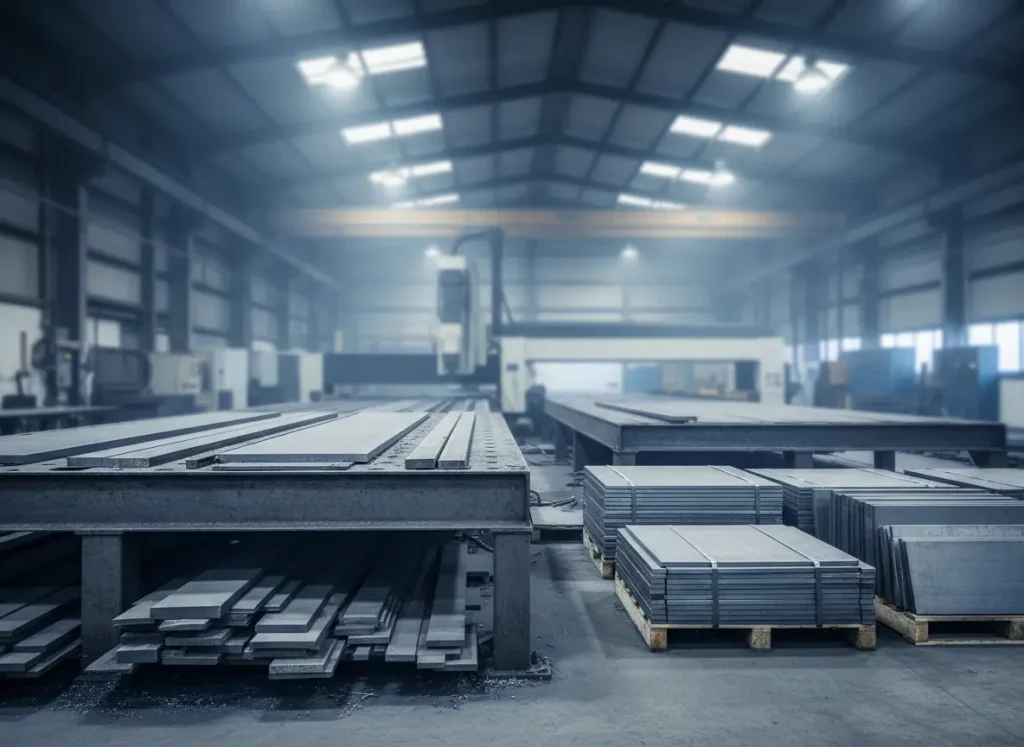
If you’re ordering steel plate cut to size, you’re usually doing it for strength, stiffness, and durability—base plates, mounting plates, machine guards, brackets, frames, and structural details.
If you already have sizes or a drawing, send it here: Service Request.
1) Plate vs sheet (quick rule of thumb)
People often say “sheet” and “plate” interchangeably, but in practice:
- Sheet is typically thinner and more prone to flex
- Plate is thicker, stiffer, and chosen for load-bearing or mounting work
If your part must stay flat, take bolts, or carry load, plate is usually the right call.
2) Pick the right steel type for the job
Start with how the part will be used:
- General fabrication / mounting: common structural steels are often suitable
- Wear/impact: may need a tougher/wear-focused grade
- Outdoor use: plan for corrosion protection (paint, galvanising, coating)
If you tell us the application (e.g., “base plates for posts outdoors” or “machine mounting plate indoors”), we can guide the most practical option.
3) Thickness: stiffness, tapping, and weld prep
Thickness affects:
- Stiffness (deflection under load)
- Whether you can tap threads into the plate
- Weld prep and heat distortion risk
If you’re bolting through, check you’ve got enough thickness for washers, countersinks/counterbores, or thread engagement (if tapped).
4) Flatness and distortion: what to expect
Steel plate can move slightly during cutting—especially thicker sections or parts with lots of internal cut-outs.
To avoid surprises:
- Call out if the plate must be flat for mounting
- If it’s a mating surface, identify the critical face
- For assemblies, include how the plate locates (datums)
If flatness is critical, it’s worth saying so at quote stage.
5) Cut type: simple rectangles vs profiled plates with holes
Two common order types:
- Simple cut-to-size blanks (rectangles/squares)
- Profiled plates (holes, slots, radii, cut-outs)
For repeatable accuracy (holes lining up, profiles matching), it’s usually best to quote via:
- Laser Cutting (clean profiles, great for detailed parts)
- CNC Cutting (repeatable accuracy, ideal for batches)
6) Holes: the details that prevent rework
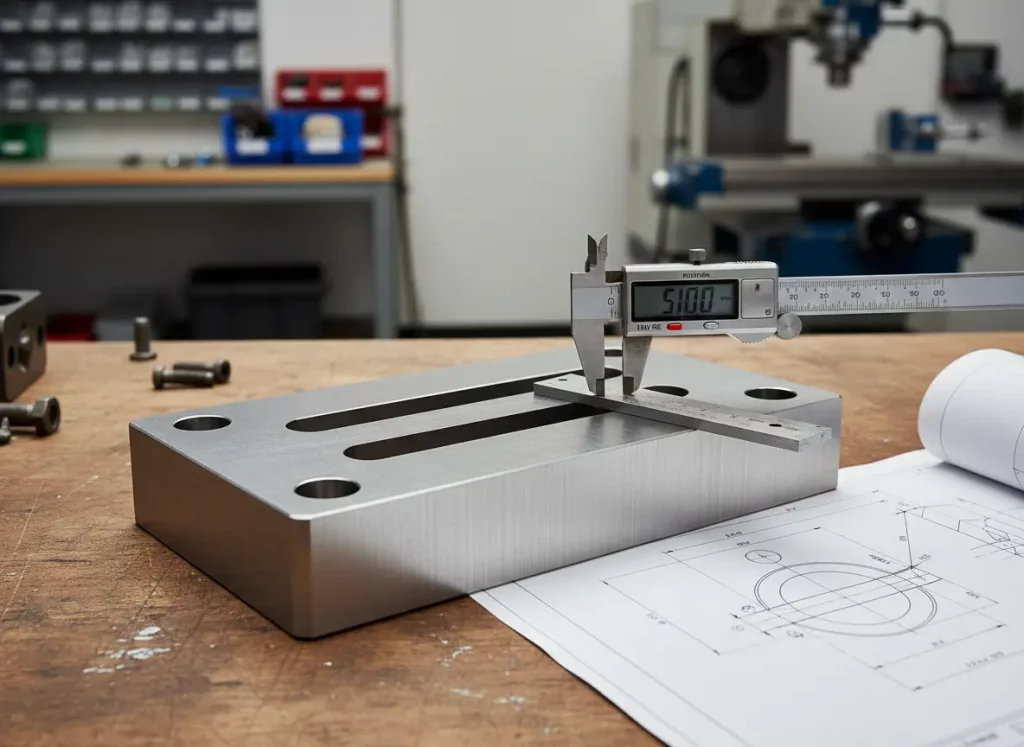
When holes matter, specify:
- Hole diameter
- Hole position from a clear datum (e.g., from bottom-left corner)
- Whether holes are clearance, tapped, countersunk, or slotted
If you can send a PDF drawing or DXF, quoting and cutting is faster and more accurate.
7) Edge condition: deburr and handling
Even if the plate isn’t “visible”, sharp edges slow installs and create handling risk.
If it’s handled regularly or installed in tight spaces, ask for:
- Deburred edges
- Corner radii (where appropriate)
8) Corrosion protection and finishing
If the plate is going outdoors (or into a wet/dirty environment), finishing often matters more than people expect.
Overview here: Metal Finishing UK.
9) If you need fabrication, not just cut plate
If your plate is part of a welded assembly, frame, bracket set, or needs bends/formed features, BMSS can help end-to-end:
10) What to send for a fast, accurate quote
To quote steel plate cut to size quickly, send:
- Length x width x thickness
- Intended use (mounting, structural, wear, indoor/outdoor)
- Quantity (one-off vs batch)
- Any holes/slots/cut-outs (drawing preferred)
- Finish requirement (if outdoor)
- Delivery postcode + deadline
Submit here: Service Request.
Common mistakes to avoid
- Ordering thin “sheet” when you needed plate stiffness
- Not flagging flatness as critical for mounting
- Missing hole datums (holes don’t line up)
- Forgetting corrosion protection outdoors
- Not specifying deburr/corner radii for handled parts
Next step
Send your cut list or drawing and tell us what the plate does in the real world (mounting, load, outdoor exposure). You’ll get a faster quote and fewer revisions.
Start here: Service Request.