
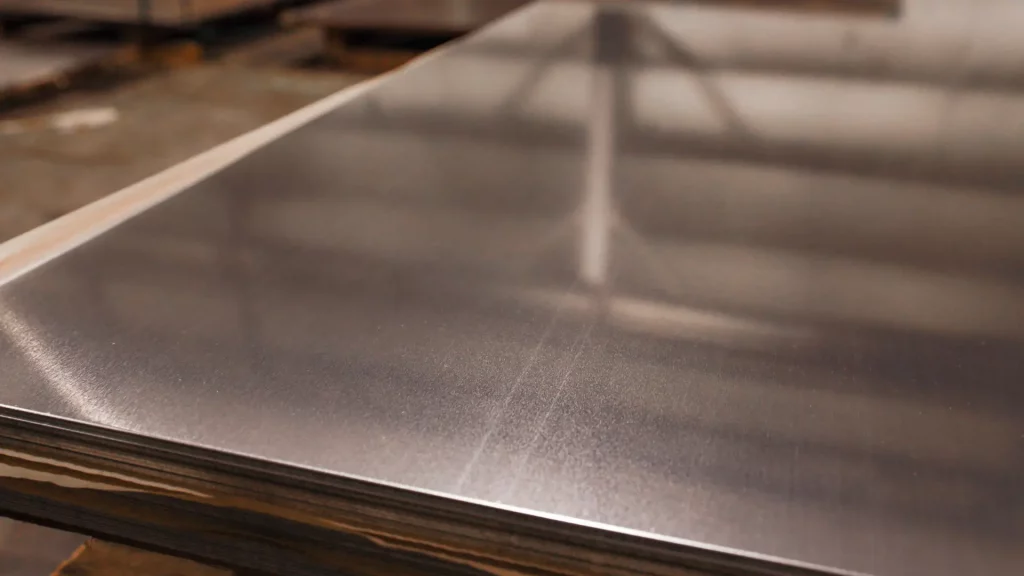
If you need stainless steel sheet cut to size, the two things that usually decide whether the job goes smoothly are (1) choosing the right grade for the environment and (2) specifying the finish/edge quality for how the part will be used.
If you already have a cut list or drawing, send it here for a quote: Service Request.
1) What are you using the sheet for?
Stainless sheet is commonly ordered for:
- Outdoor panels and covers
- Splashbacks and hygienic wall protection
- Enclosures, guards, and access panels
- Brackets, plates, and fabricated assemblies
Tell us whether it’s indoor/outdoor, whether it will be washed down, and whether it’s visible (appearance matters) or hidden.
2) Stainless grades: the practical decision (304 vs 316)
Most cut-to-size stainless sheet requests come down to 304 or 316.
- 304 stainless: a strong general-purpose choice for many indoor and light outdoor applications
- 316 stainless: better corrosion resistance for harsher environments (e.g., coastal air, marine, certain chemicals)
If you’re unsure, a quick note like “outdoor, 2 miles from the coast” or “food-prep area, regular cleaning” helps us recommend the right option.

3) Thickness: stiffness, dent resistance, and fabrication
Thickness affects:
- How flat/stiff the sheet feels (especially on larger panels)
- Dent resistance
- How it behaves if you’re bending or fabricating it
If the sheet is a large visible panel, going too thin can lead to flex/“oil canning” and a less premium finish.
4) Finish options: appearance + cleanability
Finish is where stainless projects often succeed or fail visually.
Typical considerations:
- Brushed / satin look for visible panels
- Directional grain: if multiple panels sit side-by-side, you usually want the grain direction consistent
- Protective film: helps reduce scratches during transport and installation
If you need finishing or surface protection, see: Metal Finishing UK.
5) Cut type: simple blanks vs profiled parts
There are two common order types:
- Simple blanks (rectangles/squares)
- Profiled parts (holes, slots, cut-outs, radii)
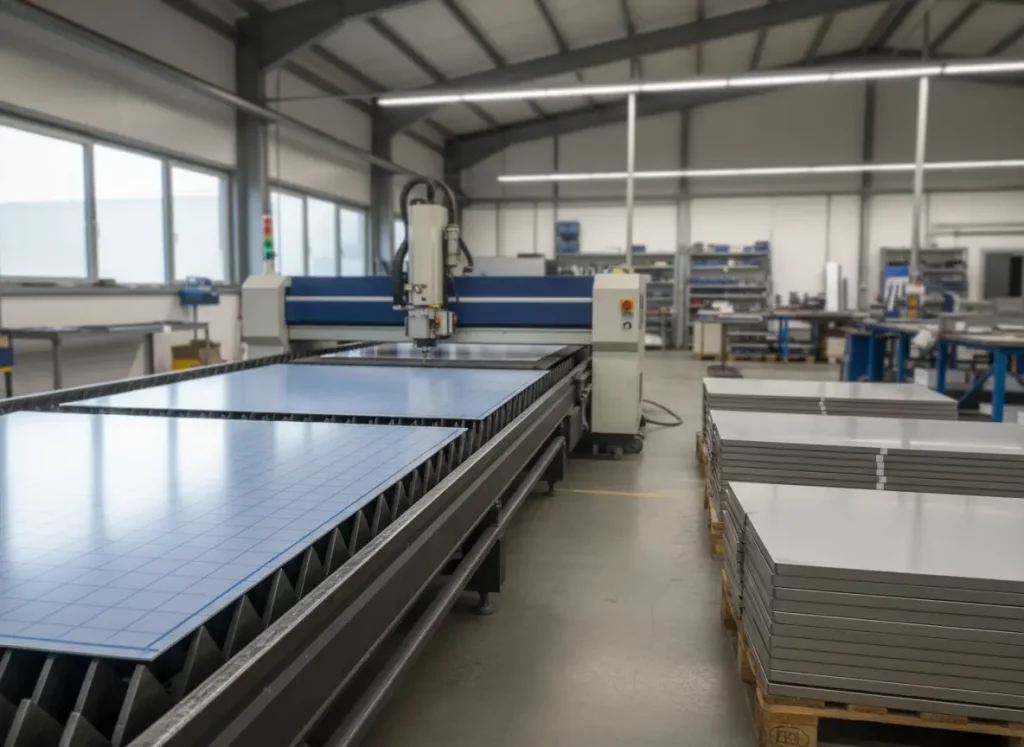
For profiled parts and repeatable accuracy, it’s usually best to quote via:
- Laser Cutting (clean edges, great for detailed profiles)
- CNC Cutting (repeatable accuracy, ideal for batches)
6) Tolerances: what to call out (so it fits first time)
Most jobs don’t need ultra-tight tolerances across every dimension. The key is to identify what must be exact.
Good practice:
- Mark critical dimensions (the ones that affect fit)
- For holes, include diameter and position from a clear datum
- If parts must align in an assembly, include a simple drawing (even a marked-up PDF is fine)
7) Edge quality and safety: deburr and corner radii
Stainless edges can be sharp. If the sheet will be handled, removed regularly, or installed where people might catch an edge, specify:
- Deburred edges
- Rounded corners / corner radii
- Cleaner edge expectations for visible parts
8) If you need bends or a finished component
If your stainless sheet needs folds, returns, or becomes part of an assembly, it’s often more efficient to quote it as a fabricated part.
BMSS can support:
9) What to send for a fast, accurate quote
To quote stainless steel sheet cut to size quickly, send:
- Length x width and thickness
- Grade preference (304/316) or the environment (indoor/outdoor/coastal/chemical)
- Quantity (one-off vs batch)
- Any holes/slots/cut-outs (drawing preferred)
- Finish requirement (brushed/satin, protective film, grain direction if visible)
- Delivery postcode + deadline
Submit here: Service Request.
Common mistakes to avoid
- Using 304 where 316 is needed (coastal/harsher environments)
- Not specifying finish/grain direction for visible panels
- Forgetting protective film for install-heavy jobs
- Not calling out deburring or corner radii for handled parts
- Sending hole positions without a clear datum
Next step
Send your cut list (or drawing) and tell us where the part will be used. You’ll get a faster quote and the right grade/finish recommendation.
Start here: Service Request.